Planning a garden renovation often starts with excitement and ends in a materials dilemma. You picture a new garden office, a quiet studio, or an outbuilding that finally makes use of the space at the bottom of the lawn. Then the decisions stack up.
Will the material suit the character of your home? Will it cope with a wet British winter? Will it still look right in ten years? Since remote working reshaped how people use their gardens, demand for well-built garden rooms has climbed sharply, and the pressure to choose well has climbed with it.
Here are five materials worth considering.
Oak for Heritage-led Garden Builds
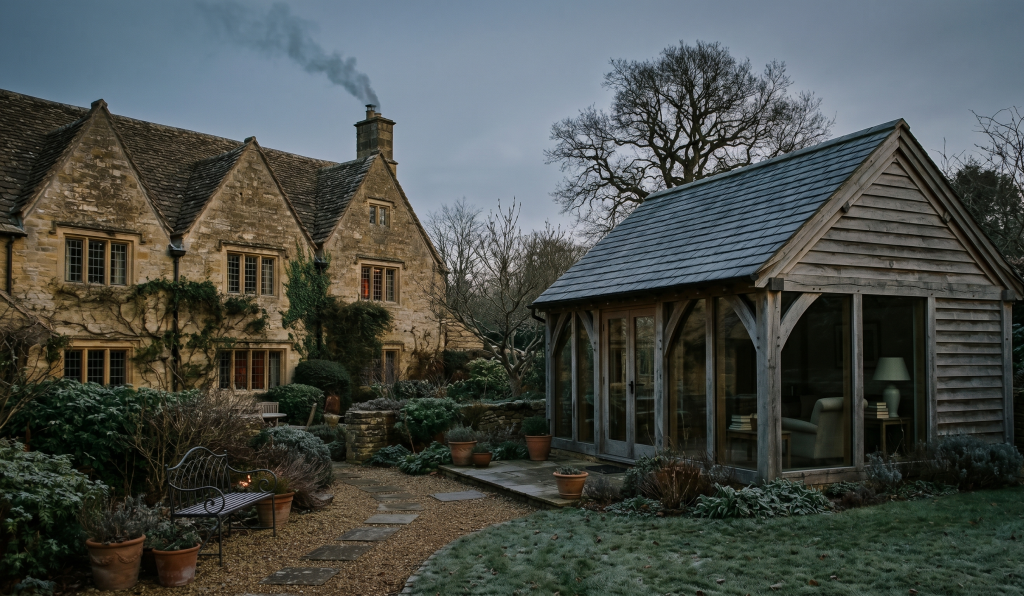
Oak is the natural starting point for period properties, oak framed homes, and rural settings. A well-detailed oak frame can last well over a century. It weathers to a soft silver grey that only improves the look over time.
Maintenance is minimal once the timber settles. Responsibly sourced European oak also carries strong sustainability credentials, and choosing FSC certified timber is a straightforward way to verify that. Oak suits garden rooms, gazebos, porches, and outdoor kitchens where craftsmanship matters. The upfront cost is higher than most alternatives, but the lifespan and resale value usually justify it.
On a recent project in the Cotswolds, we specified green oak for a detached garden room beside a Grade II listed farmhouse. Two winters in, the frame has settled beautifully and the structure already looks like it has always been there.
Timber Framing for Garden Offices and Studios
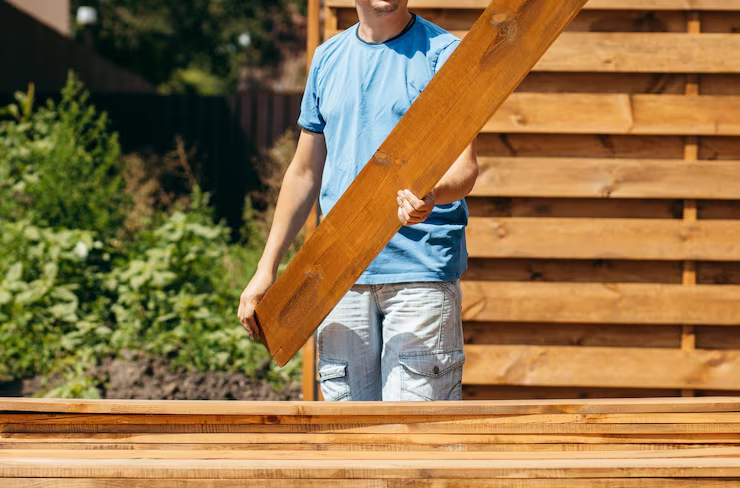
Timber is the most flexible option for everyday garden buildings. It works for offices, studios, gyms, and small extensions, and stays light enough to sit on simple foundations.
Treated softwood frames typically last 30 to 60 years with sensible care. Engineered products such as glulam and cross-laminated timber extend that further while allowing larger spans and cleaner lines. Timber is quicker to build with than masonry and easier to insulate to modern standards, which matters more than ever now that a garden office is expected to be usable all year round.
Cladding choice does most of the visual work. Larch, cedar, and feather edge boards each weather differently and sit better with certain property styles. If you would rather not project manage the build yourself, specialists such as Elfords handle the design and construction under one roof.
Most domestic garden buildings fall under permitted development meaning no extra paperwork, but it is worth checking the Planning Portal guidance on outbuildings before you commit to a footprint or height.
Brick for Permanent Outbuildings
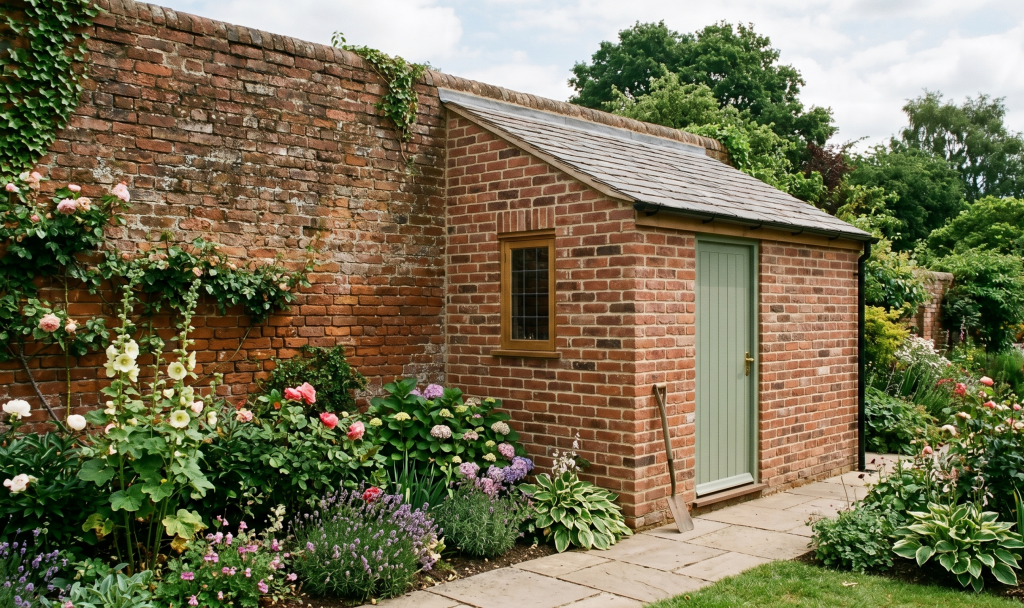
Brick suits projects meant to be permanent. Think garden walls, traditional outbuildings, or extensions that need to match the main house.
Lifespan runs comfortably past a hundred years. Thermal mass helps with year-round comfort, and maintenance stays low. The main considerations are cost and matching. Labour is higher than timber, and on a period property you will usually need reclaimed stock to sit well alongside the existing walls. On a recent renovation in Warwickshire, we sourced reclaimed brick to tie a new garden store into an 1890s rear wall, and the colour match made all the difference.
Planning and permissions are more involved for brick builds than for lightweight garden rooms, so factor that into your timeline.
Steel and Composite for Modern Structures
Steel frames with composite cladding suit contemporary garden rooms and larger spans. The structure is durable, low maintenance, and performs well on fire resistance.
The trade-off is character. Steel rarely sits comfortably next to a thatched cottage or a Cotswold stone farmhouse. Keep it for modern homes or contemporary additions clearly separated from the original building. Pay close attention to insulation and condensation detailing, since steel conducts heat readily and needs careful build-up to stay comfortable in winter.
Glass for Light-filled Garden Rooms
Full-height glazing has become a signature look for garden rooms used as proper living space. Modern double and triple glazing handles British weather well and keeps heat loss low.
Glass works best when paired with another structural material. Oak frames give it warmth and a heritage feel. Steel gives it a sharper, modern edge. Pay attention to the u-value of the units you specify, since this is what really determines whether the room is comfortable in January. Maintenance is straightforward, mostly cleaning and occasional checks on seals and gaskets.
Which Material Suits Which Project
A quick reference for matching material to project:
- Oak: heritage homes and statement garden rooms
- Timber framing: offices, studios, and most everyday garden buildings
- Brick: permanent outbuildings that need to match the house
- Steel and composite: modern builds with big openings or wide spans
- Glass: spaces designed around light and a connection to the garden
Choosing the Right Material for Your Garden
The best garden renovations come down to two questions. Does the material match the character of the property? And does it match how the space will actually be used? Get those right and cost, planning, and maintenance become easier to weigh up.
Start by looking at the materials already in your home. Then build outward from there.